
‘There’s too many of them these days…’
All these years later, I can still recall the shock of first reading the totals. 198 wildcats, 462 kestrels, 301 stoats and weasels, 63 goshawks, 1,431 hooded crows, 275 kites – all killed in the name of protecting game on a single Scottish shooting estate between 1837 and 1840. That such an abundance of wildlife could have been here so recently, was truly staggering1. Some chapters of history ought not to be forgotten.
Yet, forgotten is exactly what this era of plenty has been. Time has moved on, perceptions of how much wildlife there could or should be have shifted, and today, most of us can’t imagine a UK so rich in nature. This is evident when we hear the line: “There’s too many of them these days.” It’s routinely applied to badgers, pine martens, otters, seals, red kites… just about any animal bouncing back from historical lows.
Why are these wildlife comebacks so uncomfortable? What’s behind the assertion that there are now ‘too many?’ And what does ‘too many’ actually mean? In our second At the Edge: WORDS article, we explore the sentiment behind this frequently used but seldom-defined phrase.
When humans, pets and livestock make up 95% of global mammal biomass, and wild mammals just 5%2, the idea that anywhere has too much wildlife seems far-fetched. But to apply the theory to the UK is absurd. Our large land-based predators have all been killed off. 26% of our terrestrial mammals and 43% of our bird species are threatened with extinction. 3
This is a quote pulled from the text
– Peter Cairns
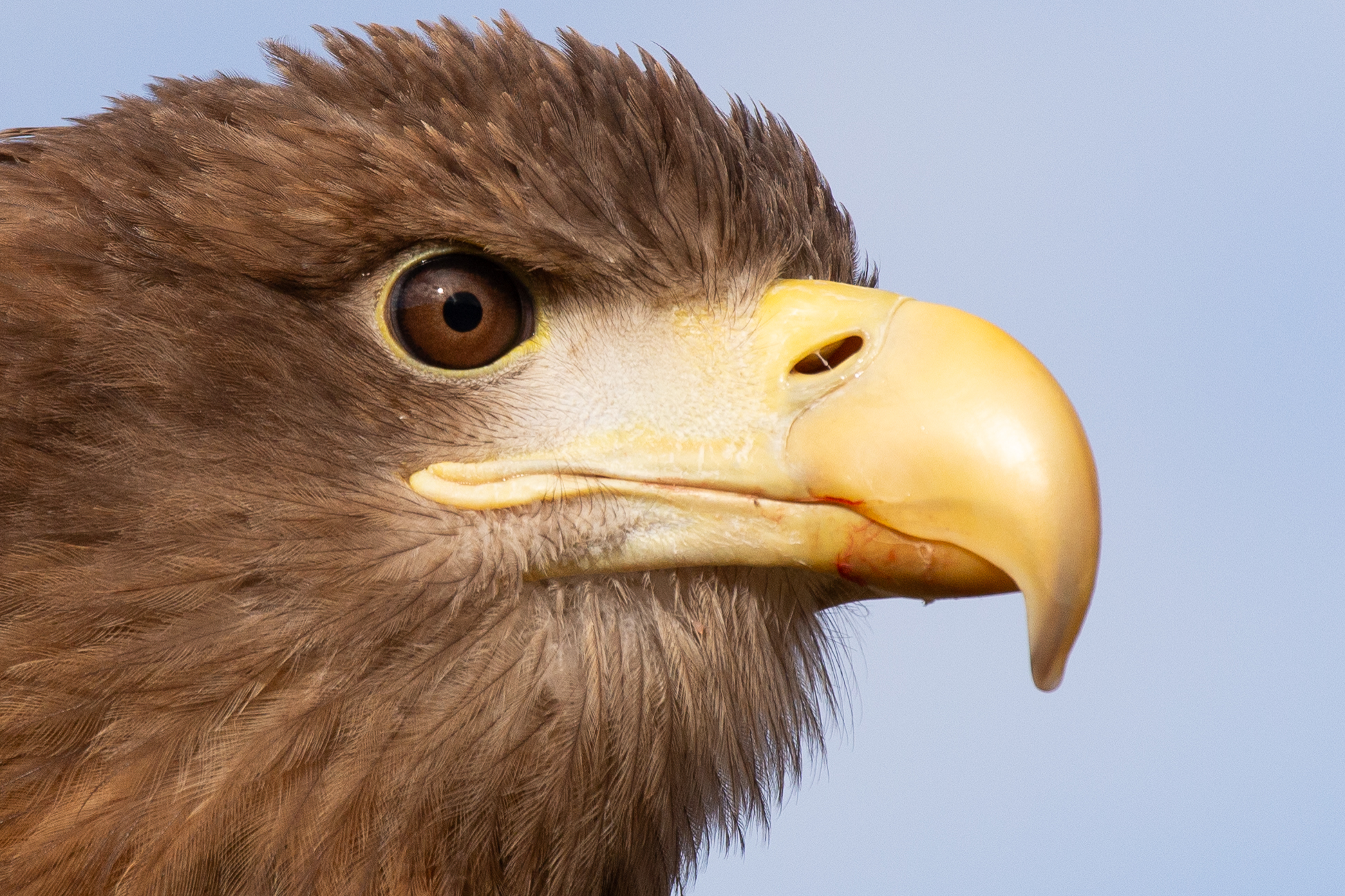
Amongst the despair are rare stories of qualified success. Badgers and pine martens are recovering from historic low levels, driven by human persecution. Our reintroduced sea eagle population now stands at 200 pairs. A century after reintroductions began in Europe, beavers are slowly recolonising our waters. However, when we consider how much biodiversity we had, and how little remains today, the notion that we are now overrun by these animals must be treated as spurious.
But are we in danger of interpreting ‘too many’ too literally? When people say these words, what do they really mean? Is it that an animal, or its impacts, is more visible than it was previously? Is it that certain species might impact others that we deem more valuable?
Either way, the root of the problem is surely the same. In the last century alone, the UK lost 90% of its wetlands. 50% of our hedgerows have gone since World War Two. Ancient woodland covers only 2.5% of our landmass. Now people, predators and prey are crammed together, fighting it out for the last remaining fragments of habitat.
Here we reach the heart of the issue, the point of this article. It would be easy to dismiss the ‘too many’ claim as the stuff of ecological blindness and refuse to engage any further. But left unaddressed the perception that certain species are out of control has great potential for harm. ‘There’s too many’ is often the pretext for further controlling, curbing and culling of nature.
Such is the havoc we have wreaked on our ecosystems that hard choices may indeed have to be made. There may be occasions when the presence of wildlife poses too great a risk to people or infrastructure. There may be situations where we choose to control a (relatively) abundant species to preserve a rarer one. We should all be prepared for these choices. But we must ensure that the underlying reason for these conflicts is also understood and addressed. We must make more space for nature, stop treading on its toes, remember that we need healthy, functioning ecosystems just as much as animals do. Otherwise, we are simply killing for killing’s sake, with no hope of solving the issue.
More than anything else, we must reconnect with the past, understand what it was to have many wild animals in this country. Only then might we finally show the ‘too many’ argument for the fallacy that it is and finally lay it to rest.
1 For those unfamiliar with the history, these are by no means isolated records. Other equally shocking ones exist. Between 1776 and 1786 a scheme established for the preservation of sheep, game and poultry across five Aberdeenshire parishes saw 70 eagles, 634 foxes, 44 wildcats, 57 polecats, 1,347 ravens/hooded crows and 2,520 red kites.